
The AI Disconnect
An Economic Problem for Our Time

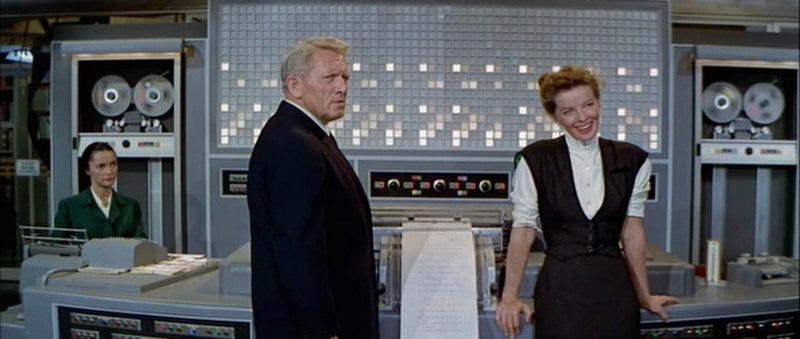
People have been afraid of Artificial Intelligence taking their jobs since computers were invented.
The 1955 play Desk Set, which became he most forgettable Tracy-Hepburn film of all time, had this as its plot. Hepburn’s TV network research department feared the new mainframe Tracy’s character was installing would replace them. In the end he said there would be new jobs for everyone, and better ones.
It was a comedy.
He should have said different jobs. Indeed, Hepburn’s research job did disappear in time. So did that of Tracy’s salesman, overseeing the computer’s installation. But the great grandchildren of those characters are doing fine. New jobs were created. That’s because new work was created.
That last is the key point. There is no fixed amount of work in the world. There are always new jobs that need to be done, and others that meet our desires.
The AI boom has been different. This time, we’re told, jobs will disappear, even entire professions, practically overnight. But the roll-out of AI software, continuing today with the Google vs. Microsoft office suite battle, shows something quite different.
Today’s AI tools are still just productivity enhancements, not human replacements. They make managing communities easier. They make getting imagination onto a page or a screen faster. The tools give management better, more fine-grained control over operations than before.
What smart companies are doing in response is more. Smart companies are using AI in their efforts to get into new markets, to gain market share, and to make things easier for customers.
It’s the dumb ones that are firing people. There are always dumb ones.
The Real Battle
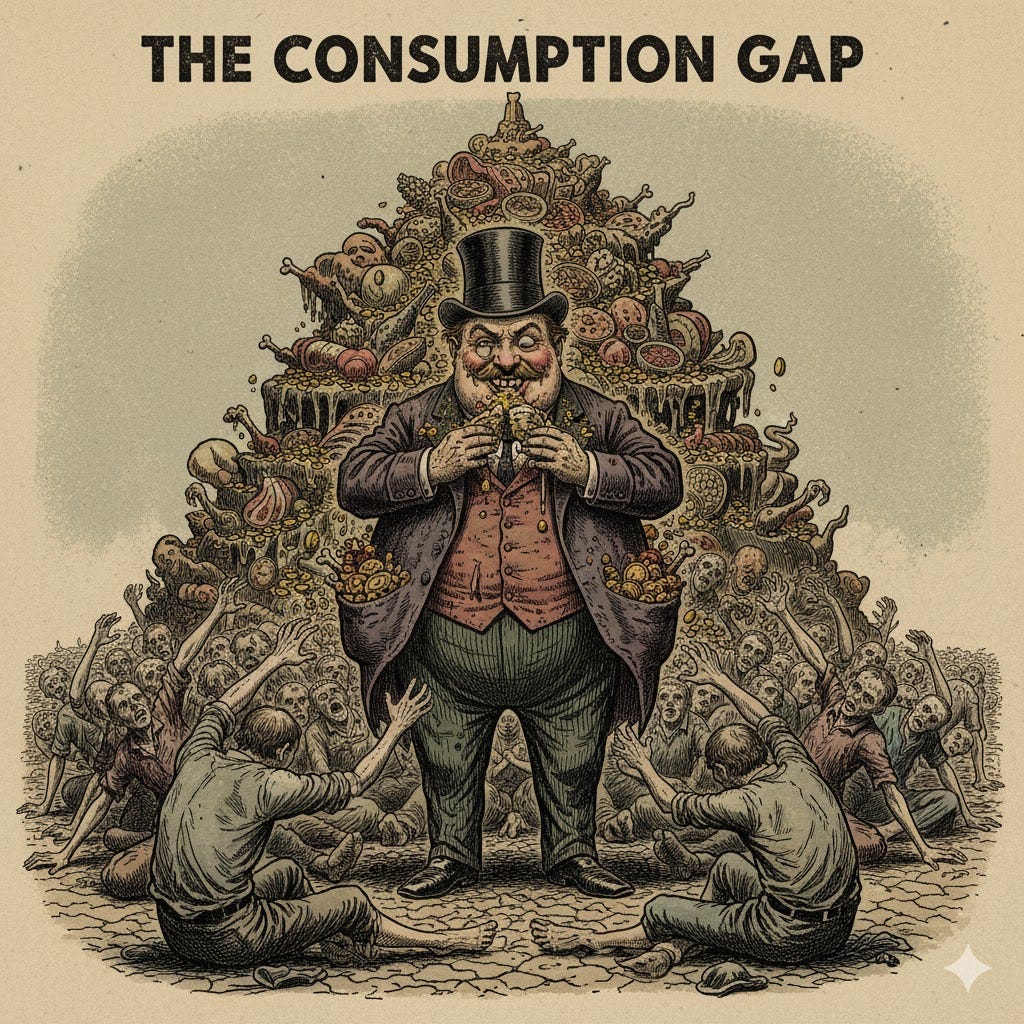
The real battle in AI is a political one. It lies in how top management wants to see AI, and in how workers are reacting to management’s desire. (Illustration from Google Gemini.)
Management acts as though AI can run the world by itself, that labor will no longer be needed. Factories will be fully automated. They’ll have full visibility of operations from their phones. Everyone else will get to pound sand.
I have no idea where they got the idea this could be a popular outcome, but despite management winning the last election it’s not. The whole business of business, and of government, is to serve people. You can’t serve people without people, and you can’t serve people unless they have the money to buy what you’re offering.
The result of this monumental outbreak of stupidity has been an AI backlash, a climate of fear that serves no one. Young people lack ambition. Old people are afraid to retire. This is the most depressing economic boom I have ever seen.
There is no obvious catalyst for the anger yet, but that will come. Maybe it will be a market crash. Maybe it will be a political earthquake. It might be social upheaval, or an environmental disaster.
All I know is that it will come, and that you’ll know it when you see it.
A New Hope
The stock market has been on fire since bottoming in 2022. Growth has been constant despite changing politics. The abundance delivered by modern software is unlimited, but it’s in so few hands that everyone feels like they’re just getting by. (Illustration from Google Gemini.)
I have written many times about how the present path is unsustainable. The question is whether a crash, whenever it comes, will bring anything better.
Wealth is measured in market cap, and market cap isn’t taxable. That’s the heart of the matter. It’s hard to measure market cap because it can turn on a dime. It’s the last price paid for a stock, times the number of shares. One guy pays a little more and wealth drops from the sky. Another pays a little less and it disappears.
Proposals to tax market cap run up against this fact. You’re either limiting investment capital, thus growth and productivity, or you’re taxing air. Make a grab for the money and, with one sell order, it’s gone.
In short, the problem is how the benefits of our growing productivity are being distributed. Whoever can help create a fix for this that doesn’t destroy the global economy deserves the Nobel Prize. I eagerly await that new hope because, when it comes, it will bring a political revolution.
If the value of AI productivity is dealt out broadly, there will be a lot of non-AI jobs created at decent wages. That's how computing has worked until this decade. Our parents didn't get regular massages or yoga classes, for instance.
I suggest reading this together with my "UBI, AI and reality, always in the wrong ORDER": https://mfioretti.substack.com/p/ubi-ai-and-reality-always-in-the